

Seasonal HVAC Maintenance Checklist for Energy Savings and Comfort
Seasonal HVAC maintenance is the routine care that keeps heating, ventilation, and air conditioning systems operating efficiently, reliably, and safely throughout the year. In Poway and greater San Diego, a longer cooling season and mild winters place extra demand on air conditioning and mixed-use systems, so timely seasonal maintenance delivers measurable energy savings and longer system life. This guide explains what homeowners should do each season, which tasks are safe to handle as DIY, and when to schedule professional tune-ups to avoid unexpected breakdowns. You will find a season-by-season maintenance schedule, concise how-to steps for spring and summer preparation, fall/winter readiness tips, and a detailed component-by-component guide to filters, coils, refrigerant, ductwork, and thermostats. Throughout the article we’ll include practical checklists, comparison tables for quick reference, and clear signals indicating when a NATE-certified technician should intervene to protect comfort and indoor air quality.
Why Is Seasonal HVAC Maintenance Crucial for Poway Homes?
Seasonal HVAC maintenance is the proactive practice of inspecting, cleaning, and adjusting system components to match changing weather demands and occupant needs. In Poway’s climate, systems shift between cooling and intermittent heating, which increases cycling and wear; maintenance reduces component stress and prevents performance losses. Regular seasonal care improves energy efficiency, decreases emergency repairs, and preserves indoor air quality by keeping filters and coils clean. The practical outcome is lower utility bills, fewer mid-season failures, and a more consistent indoor environment that protects family comfort and health.
Homeowners benefit most when maintenance targets workload drivers like airflow, refrigerant charge, and thermostat calibration, which all affect runtime and capacity. Dirty coils and clogged filters can reduce system capacity by as much as 20–30% and increase runtime, so preventive cleaning directly restores efficiency. The next section outlines how maintenance extends system lifespan by addressing the mechanical and thermal causes of premature failure. HVAC maintenance plan by addressing the mechanical and thermal causes of premature failure.
How Does Regular Maintenance Extend HVAC System Lifespan?
Regular maintenance extends HVAC lifespan by reducing mechanical stress, correcting airflow problems, and preventing component overheating and electrical faults. Tasks such as replacing filters, lubricating moving parts, verifying refrigerant levels, and tightening electrical connections prevent accelerated wear and reduce failure rates among motors, compressors, and heat exchangers. For example, keeping coils clean reduces compressor run-time and temperature swings, which protects compressor bearings and reduces the likelihood of costly replacements. Owners should schedule professional internal inspections at least annually to check sealed-system components and combustion safety, because those items require specialized tools and training.
Research further supports the critical role of proactive maintenance in enhancing the longevity and efficiency of building systems.
Sustainable Maintenance for Building Lifespan & Energy Savings
Sustainable maintenance management strategies have emerged as a crucial approach to extending building lifespans while minimizing environmental impact. However, the relationship between these strategies and building longevity remains underexplored in the literature. This scoping review aims to synthesize and analyze the current body of knowledge on sustainable maintenance management strategies and their influence on building lifespans.
Influence of Sustainable Maintenance Management Strategies on Lifespan of Buildings: A Scoping Review, H Ojobo, 2024
Routine attention also catches small issues—like a failing capacitor or an obstructed condensate drain—before they escalate into major failures. Spotting and correcting these problems during seasonal tune-ups keeps repair costs lower and extends the overall useful life of the system, which in turn lowers total cost of ownership for homeowners.
What Energy Efficiency Gains Result from Seasonal HVAC Care?

Seasonal HVAC care improves energy efficiency by restoring designed airflow, removing thermal resistance from dirty coils, and maintaining correct refrigerant charge and calibration. Clean filters and coils reduce runtime and improve heat transfer efficiency, often producing measurable utility savings in the months following a professional tune-up. Homeowners can expect reduced cycling and shorter run times when maintenance is performed before peak seasonal demand, translating into lower monthly energy expenses and reduced wear on fans and compressors. Recent studies and industry guidelines confirm that routine maintenance yields consistent efficiency benefits that compound over a system’s life.
Monitoring thermostat settings and using programmable or smart controls during seasonal transitions further reduces energy use by minimizing unnecessary runtime. When efficiency gains are combined with targeted envelope improvements such as shading and duct sealing, the overall comfort improves while operational costs drop. The next section provides a season-by-season maintenance schedule and a compact reference table you can use to plan tasks throughout the year.
What Is the Optimal HVAC Maintenance Schedule for Each Season?
Seasonal scheduling organizes maintenance tasks so systems are tuned ahead of demand shifts and minor issues are caught early. A well-structured schedule clarifies which items homeowners can handle themselves and which require professional service, and it aligns inspections with local climate patterns to protect performance in Poway’s extended warm season. The following table summarizes recommended frequency and whether tasks are typically DIY or professional services, making it easy to plan quarterly checks and annual tune-ups.
| Component | Action / Frequency | DIY or Pro |
|---|---|---|
| Air filter | Replace every 1–3 months depending on MERV and occupancy | DIY |
| Condenser coil (outdoor) | Inspect and clean annually, more often if dusty | DIY/Pro |
| Evaporator coil (indoor) | Inspect annually; professional deep clean as needed | Pro |
| Refrigerant charge | Check annually during tune-up; adjust if low | Pro |
| Thermostat & controls | Test and recalibrate seasonally | DIY/Pro |
| Ductwork | Inspect yearly for leaks and insulation issues | Pro |
This table provides a compact reference for seasonal planning and helps homeowners balance safe DIY tasks with professional interventions. The summary below highlights core items to prioritize each season to maximize efficiency and reliability.
Which DIY HVAC Tasks Can Homeowners Perform Safely?
Homeowners can complete several safe, high-impact DIY tasks that keep systems running efficiently and reduce service calls. Common DIY tasks include:
- Replacing disposable filters
- Clearing debris from outdoor condenser units
- Wiping accessible coil fins
- Checking and resetting tripped breakers
- Testing thermostat schedules
Safety cautions are essential: always turn power off at the disconnect before working near exterior units and avoid bending coil fins or working on sealed components. If a task requires refrigerant handling, electrical diagnostics beyond simple resets, or access to internal refrigeration components, stop and schedule a professional service. These DIY efforts shorten professional visits and often restore noticeable performance immediately, paving the way for the recommended professional tune-up timing discussed next.
When Should You Schedule Professional HVAC Tune-Ups?
Professional tune-ups should be scheduled before major seasonal load changes and when performance indicators suggest degradation. For air conditioning, arrange a professional tune-up in spring before sustained cooling begins to check refrigerant, measure airflow, and verify electrical integrity. For heating systems, schedule a service in early fall to test ignition, venting, and combustion safety if your home uses combustion heating. Beyond seasonal scheduling, call a technician if you notice reduced capacity, higher-than-normal utility bills, unusual noises, short-cycling, or persistent humidity problems.
Annual or biannual professional inspections with component testing provide the in-depth assessment that DIY checks cannot, including sealed-system pressure measurements and safety testing. Timely professional tune-ups reduce emergency repairs and sustain efficiency gains achieved through homeowner maintenance, making them an essential part of an optimal seasonal plan.
How to Prepare Your HVAC System for Spring and Summer in San Diego?
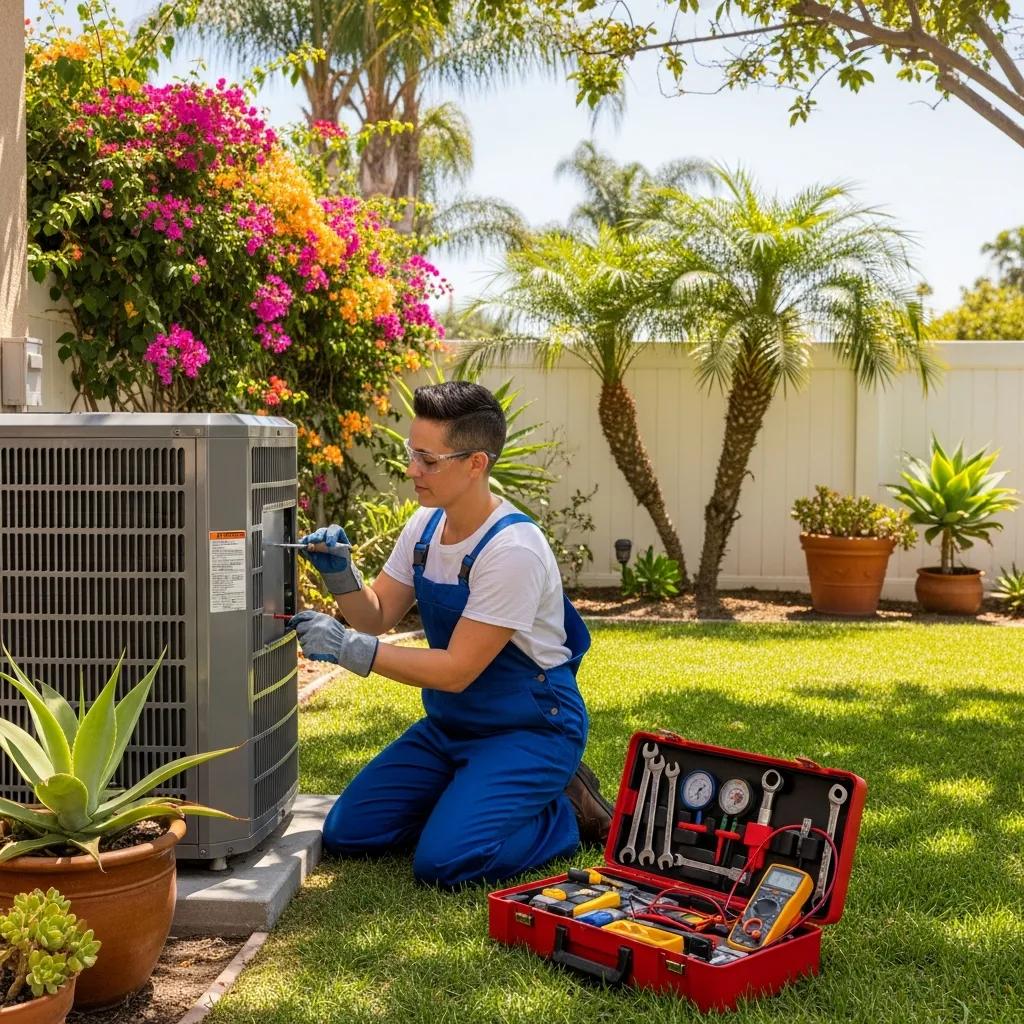
Preparing your HVAC for spring and summer means reducing restriction, restoring airflow, and ensuring the cooling system is ready for extended use. In San Diego’s warm climate, proactive spring prep reduces peak-season failures and improves initial response when cooling demand rises. Key preparation activities include filter replacement, clearing vegetation and debris from the outdoor condenser, testing the thermostat and fan operation, and confirming condensate drain flow to prevent backups. You may find useful tips in our spring AC maintenance checklist.
Follow this stepwise checklist to get the system ready for summer:
- Replace or clean air filters and note the next replacement date.
- Clear debris and trim vegetation at least two feet from the outdoor unit.
- Inspect the condensate drain and flush with a mild bleach solution if necessary.
- Test thermostat schedules and consider a programmable or smart thermostat setup.
These actions require minimal time but deliver immediate benefits in airflow and cooling responsiveness. If you encounter blocked coils, persistent low airflow, or suspected refrigerant leaks, those are signs a technician should inspect the system. After completing these checks, consider scheduling a professional tune-up to validate refrigerant levels, verify electrical components, and perform a full performance test.
For homeowners who prefer professional verification, Allied Services (operating as Hans Energy Systems) offers maintenance plan options and professional tune-ups delivered by NATE-certified technicians from Poway, San Diego. These plans prioritize energy-efficiency-focused inspections and can be scheduled to coincide with seasonal preparation to ensure systems are fully ready for summer demand.
What Are Key Spring HVAC Maintenance Tasks?
Key spring maintenance tasks restore the system’s cooling capacity and prevent early-season failures by addressing filters, airflow, and condensate management. Important tasks include:
- Replace or clean the air filter
- Check return and supply vents for obstructions
- Ensure the outdoor condenser is free of leaves, soil, and mower clippings
- Inspect the condensate pan and drain line for clogs and flush the line if necessary
Allocate time for a simple performance test: set the thermostat to cooling and verify steady cold airflow at vents and steady operation of the condenser fan. If airflow is weak at multiple registers or if the system cycles rapidly, those are clear signals to call a professional. Completing these spring tasks prepares the system for continuous cooling and reduces the risk of mid-season service interruptions.
How to Optimize AC Performance for Poway’s Warm Climate?
Optimizing AC performance in Poway focuses on reducing load and improving system responsiveness through thermostat strategy, shading, and airflow management. Use programmable setback schedules to prevent unnecessary cooling during unoccupied hours and consider modest shading or window coverings on west-facing windows to reduce solar gain. Ensure attic and wall insulation are adequate and seal obvious duct leaks that diminish airflow efficiency.
Supplement system optimization by using ceiling fans to enable a higher thermostat setpoint while maintaining perceived comfort, which reduces compressor runtime. Smart thermostats can adapt schedules to occupancy and local weather patterns, delivering measurable savings when combined with routine maintenance. These combined measures lower system stress and amplify the efficiency gains achieved during professional tune-ups, leading to more comfortable homes and controlled operating costs.
What Fall and Winter HVAC Maintenance Steps Ensure Warmth and Safety?
Fall and winter maintenance emphasizes safety, combustion checks where applicable, and maintaining airflow and indoor comfort in milder climates. For homes that use furnaces or packaged heating, fall preparation should include filter replacement, inspection of vents and flues, thermostat recalibration, and a combustion-safety check performed by a qualified technician. Even in mild San Diego winters, attention to filters, humidity control, and sealing drafts reduces energy waste and improves occupant comfort.
Seasonal safety also includes verifying carbon monoxide detectors and ensuring exhaust vents are unobstructed. If your system shows signs like delayed ignition, uneven heating, persistent odors, or increased running time, those are indicators for immediate professional assessment. The following subsections provide step-by-step fall furnace services and low-effort winter care useful for homes in milder climates.
How to Conduct Fall Furnace Preparation?
Fall furnace preparation starts with visual and functional checks that homeowners can do safely and then moves to professional safety testing. Replace the filter and inspect the burner compartment for soot or corrosion when accessible; clear any debris from intake and exhaust vents to ensure free airflow. Test the thermostat’s heat setting and run the system briefly to confirm steady ignition and consistent warm airflow from vents.
Because combustion systems involve gas, flame, and exhaust pathways, schedule a professional inspection for ignition, heat exchanger integrity, and flue venting if you observe any irregularities or if annual safety documentation is required. Performing these checks before the first sustained cold spell prevents emergency service calls and keeps indoor environments comfortable and safe.
What Winter HVAC Care Enhances Efficiency in Milder Climates?
Winter HVAC care for mild climates focuses on maintaining airflow, monitoring filters, and using humidity control to improve comfort. Replace or inspect filters every 1–3 months during winter occupancy peaks and take simple measures such as sealing drafts, closing unused vents in seldom-used rooms, and using area rugs or weatherstripping to reduce heat loss. Low-cost humidification can make lower thermostat settings feel more comfortable, reducing heating energy use without sacrificing comfort. For more information, visit our HVAC resources.
- Replace or inspect filters every 1–3 months during winter occupancy peaks
- Seal drafts, close unused vents, and use area rugs or weatherstripping to reduce heat loss
- Use low-cost humidification to make lower thermostat settings feel more comfortable
If heat output seems weak or if the system runs continuously, those signs warrant a professional check for duct leakage, airflow restriction, or control issues. Minor tenant-level interventions combined with timely professional inspections keep systems efficient through mild winters while preventing wear that can occur from extended cycling.
Which HVAC Components Require Regular Attention and How?
Maintaining HVAC components involves targeted care for each part that contributes to system performance, and knowing which tasks are safe for homeowners versus when to call a technician. Regular attention to filters, condenser and evaporator coils, the condensate drain, refrigerant charge, blower motor, ductwork, and thermostat yields the greatest reliability and efficiency gains. The component table below helps triage common issues and clarifies DIY boundaries versus professional intervention.
| Component | Common Issue | DIY Fix | When to Call a Pro |
|---|---|---|---|
| Air filter | Reduced airflow, poor IAQ | Replace or clean filter monthly | If persistent airflow issues after filter change |
| Condenser coil | Dirt buildup, reduced capacity | Clear debris, gentle rinse | Professional deep clean for heavy fouling |
| Evaporator coil | Frosting, reduced cooling | Check airflow, change filter | If freezing repeats or refrigerant suspected |
| Refrigerant | Low charge, poor cooling | N/A (requires tools) | Always call a licensed technician |
| Blower motor | Noise, weak airflow | Inspect for debris, tighten panels | If motor hums or fails to start |
This table clarifies which interventions restore function quickly and which require certified service to avoid safety or warranty issues. Regular inspections help homeowners identify issues early, and professional diagnostics resolve sealed-system problems safely and conclusively.
Why Is Air Filter Replacement Vital for Indoor Air Quality?
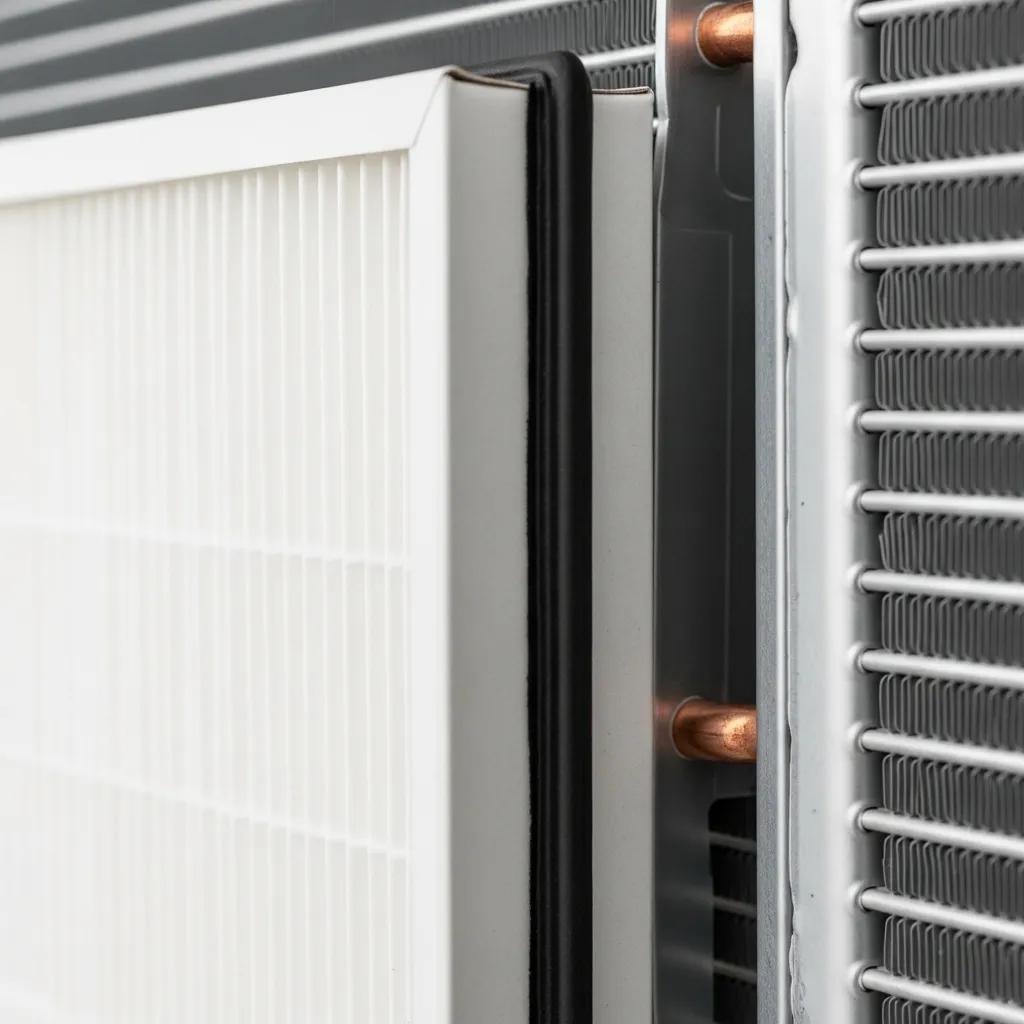
Air filter replacement is a primary line of defense for indoor air quality (IAQ) and system efficiency because filters capture particulates that otherwise circulate through ductwork and coat coils. Choosing the appropriate MERV rating balances particle capture with airflow; higher-MERV filters trap smaller particles but may restrict airflow if the system fan isn’t sized for them. Replacing disposable filters every 1–3 months—or more frequently in homes with pets or high dust loads—maintains designed airflow and prevents strain on the blower motor.
Clogged filters increase pressure drop and force the system to work harder, which raises energy use and can accelerate component wear. When filter changes don’t restore normal airflow or IAQ, a professional inspection can check for hidden leaks, duct contamination, or the need for a different filter strategy. Maintaining filters is one of the most effective, low-cost actions homeowners can take to protect comfort and indoor air quality.
How to Maintain Condenser and Evaporator Coils Effectively?
Condenser and evaporator coil maintenance restores heat transfer efficiency by removing dirt and biological buildup that reduce thermal exchange and force longer run times. Homeowners can keep condenser coils effective by clearing vegetation and debris around the outdoor unit, gently rinsing coil fins with a garden hose on low pressure, and straightening bent fins with a fin comb. Evaporator coils are typically inside the air handler and require professional access for safe deep cleaning and inspection of the drain pan and condensate lines.
Dirty coils reduce cooling capacity and can increase energy consumption significantly; if visible fouling persists after basic cleaning or if the evaporator coil shows recurring frost, contact a certified technician. Professional coil service includes a safe, thorough cleaning and inspection for leaks or insulation issues that DIY methods cannot address. Allied Services’ NATE-certified technicians can perform these professional inspections and coil services as part of a planned maintenance program in Poway and San Diego.
What Are the Benefits of Enrolling in a Professional HVAC Maintenance Plan?
A professional HVAC maintenance plan delivers predictable upkeep, priority scheduling, documented inspections, and cost-smoothing that helps homeowners avoid unexpected expenses. Maintenance plans often include seasonal tune-ups, prioritized dispatch for failures, and record-keeping that supports warranty compliance and resale value. The most tangible benefits are reduced emergency repair frequency, improved energy efficiency that lowers bills, and extended equipment lifespan through proactive component care.
Consider these primary advantages of a maintenance plan:
- Cost predictability: Regular servicing reduces surprise repair bills and helps budget for planned maintenance.
- Priority service: Members typically receive faster response times during peak seasons and emergency windows.
- Energy and longevity: Consistent maintenance preserves efficiency and delays major component replacements.
These benefits add up to a smoother ownership experience and demonstrable operating-cost reductions over time. After understanding these advantages, homeowners ready to lock in seasonal care can explore trusted local plans.
How Do Allied Services’ NATE-Certified Technicians Ensure Quality?
Allied Services (operating as Hans Energy Systems) employs NATE-certified technicians who follow standardized diagnostic and maintenance procedures to ensure consistent outcomes. NATE certification signifies that technicians have been tested against industry-recognized knowledge standards, which supports accurate refrigerant diagnostics, electrical checks, and combustion-safety procedures where applicable. Using certified technicians reduces the risk of missed issues and improves the likelihood that maintenance activities restore both capacity and efficiency as intended.
As a family-owned Poway and San Diego provider with an energy-efficiency focus, Allied Services structures maintenance visits around tune-up checklists that emphasize airflow, refrigerant, coil cleanliness, and control calibration. Homeowners who enroll in a maintenance plan gain documented service history and the assurance that trained technicians follow best practices during seasonal visits.
What Cost Savings and Comfort Advantages Come with Preventative Maintenance?
Preventative maintenance reduces operating costs by improving system efficiency, which shortens run times and lowers energy consumption. A simple example: replacing a clogged filter and cleaning coils can cut runtime and avoid a spike in electricity use during peak cooling, translating into measurable monthly savings. Preventative care also improves comfort by ensuring even temperatures, prompt cycling between setpoints, and reliable humidity control—factors that directly affect occupant satisfaction.
- Introductory note: Contact Allied Services’ maintenance team to discuss plan options and schedule seasonal tune-ups.
- What to expect: Certified technicians perform documented checks, adjust refrigerant and controls, and provide a written service summary.
- Value: Plan members receive priority dispatch and help protect efficiency and comfort across San Diego’s variable seasons.
These brief business details are provided to help homeowners evaluate professional options while keeping the main focus on actionable maintenance guidance.